

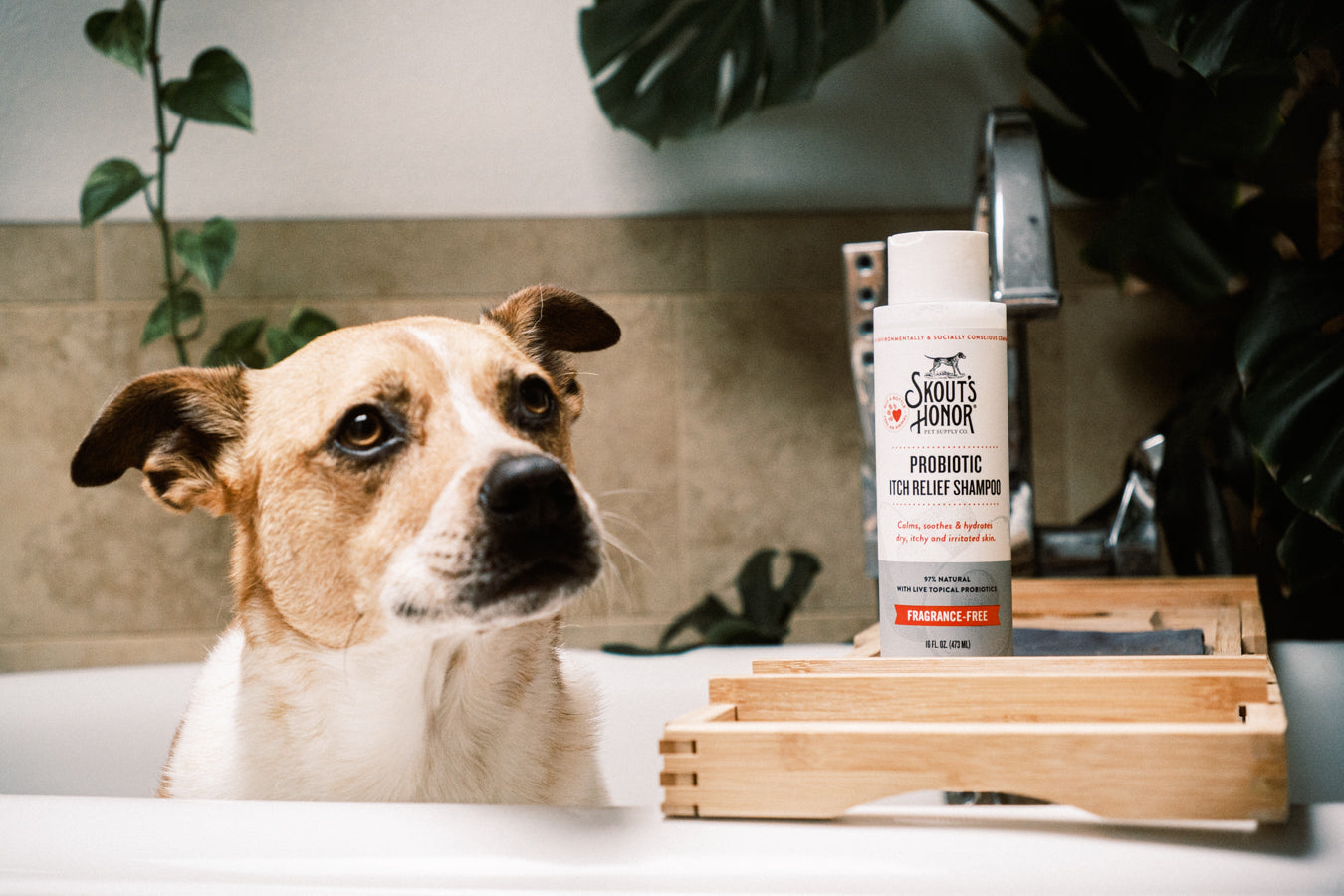
It usually starts at night. The house is quiet, everyone's finally settled, and then the collar tags start jingling because your dog is going after that same itchy spot for the hundredth time. So you check for fleas, since that's the obvious suspect, and you find nothing. No fleas, no flea dirt, and a dog who still can't stop scratching.
The good news is that you've already ruled out the easy answer, which means the real one is closer to the surface than you'd think. Usually it comes down to the skin itself, and once you understand what's happening there, helping your dog gets a lot simpler.
Is a little scratching normal?
Every dog scratches, and the occasional itch is nothing to lose sleep over. What's worth your attention is scratching that settles into a routine: the same paws, belly, ears, or base of the tail, day after day, often worse in the evening. Skin that looks red, flaky, or rough is another flag, and so is a coat that's gone dull or a doggy smell that comes back almost before the towel is dry.
A single flare after a run through tall grass will usually sort itself out, but a dog who's been at it for weeks is trying to tell you something. And if it feels especially bad right now, you're not imagining it, because itchy skin tends to peak in the warm, humid stretch of spring and summer.
If it's not fleas, what is it?
With fleas off the table, persistent scratching usually traces back to dry skin, seasonal irritants like pollen and grass, or a skin barrier that has fallen out of balance. That last one is the piece most pet parents never hear about, and it's often why the itch keeps returning no matter what you try. For a full rundown of causes by where your dog is scratching, our vet-written guide on why dogs keep scratching and biting walks through it ear by ear and paw by paw.
Am I the problem?
Probably not, but a few well-meaning habits can quietly make things worse. Bathing more often is the classic one. It feels logical, an itchy dog surely needs more baths, except that many shampoos, especially the ones with sulfates, strip away the good stuff along with the dirt and can leave skin drier than before. Reaching for whatever's under the sink is another, because human products and harsh "deep clean" pet formulas aren't built for the delicate balance of your dog's skin. And waiting it out works sometimes, though just as often it settles into a loop of itch, scratch, irritate, repeat. If any of that sounds familiar, you're in good company, and the fix is less about trying harder and more about changing the approach.
So what's actually happening?
Your dog's skin is home to a whole community of beneficial microorganisms, a microbiome, that quietly keeps things comfortable and resilient against everyday stressors like pollen, dust, and dry air. When that balance holds, skin copes well. When it gets knocked off by over-bathing, harsh ingredients, or the environment, skin struggles, and that's usually when the scratching, dryness, odor, and shedding all show up together.
The part that surprises people is that plenty of conventional grooming products disrupt that balance without meaning to. They clean, but they strip the good along with the bad. Working with the microbiome instead of against it is a genuinely different way to think about everyday skin care, and if you want the deeper version, we've explained why the skin microbiome matters here.
Do home remedies like apple cider vinegar actually help?
They're everywhere, and the appeal makes sense: cheap, natural, already in the pantry. The reality is mixed. Vinegar can sting on skin that's already irritated or broken, oils can trap grime if you overdo it, and none of them do much for the underlying balance, so they tend to cover the moment rather than change the pattern. If a gentle, natural approach is what you're after, and clearly it is, you'll get further with a routine built for your dog's skin than one borrowed from your kitchen.
What actually helps
It really comes down to two habits: clean gently, then keep skin comfortable in between.
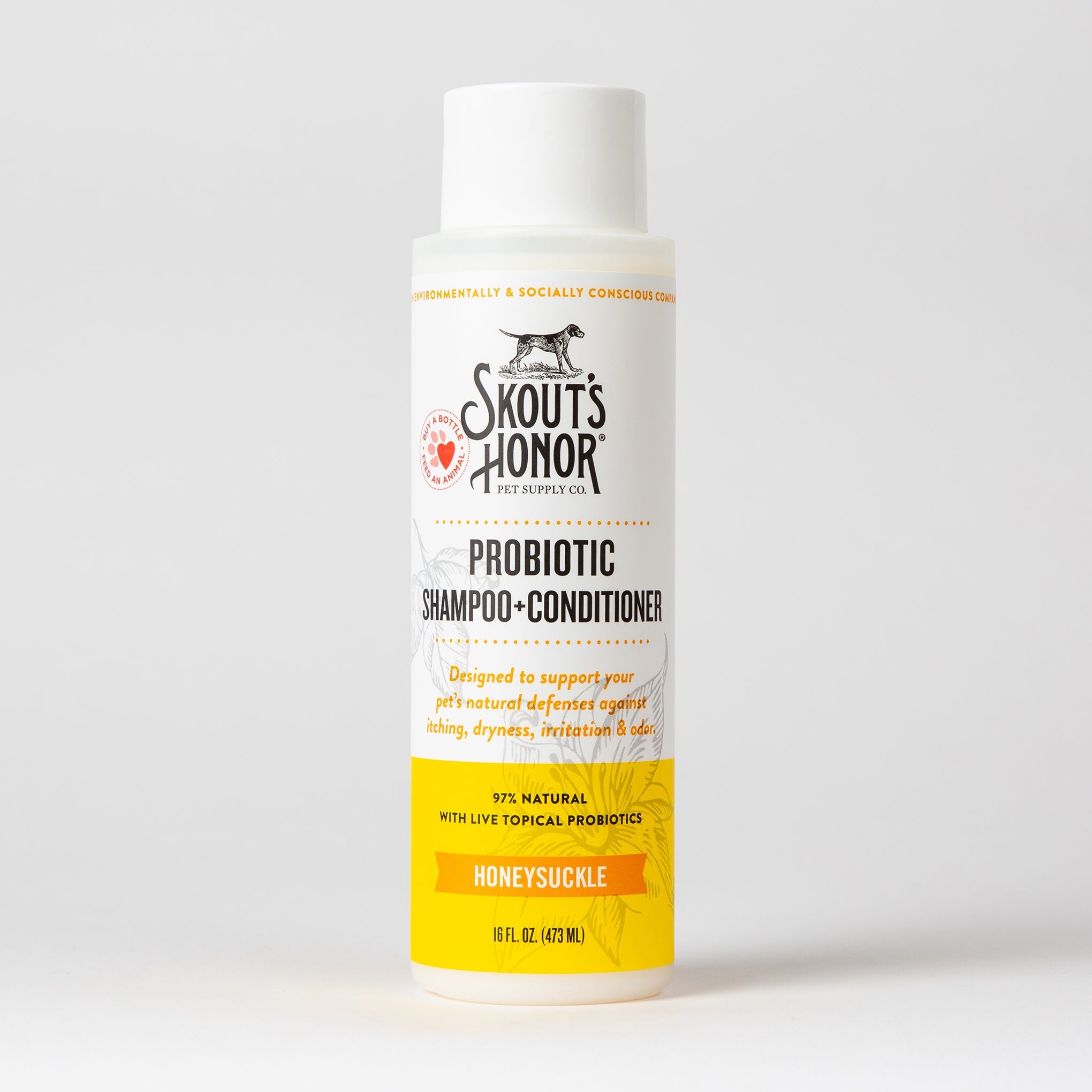
For the wash, our microbiome-friendly probiotic shampoo is a 2-in-1 made with live probiotic kefir and nourishing avocado and argan oils. It's Microbiome-Friendly Certified, meaning it's been independently validated to clean without disrupting your dog's natural skin microbiome, it's 97% natural, and it's free from sulfates, parabens, and dyes, yet still gentle enough for regular use on sensitive skin. If it foams less than you expect, that's the missing sulfates rather than a shampoo cutting corners.
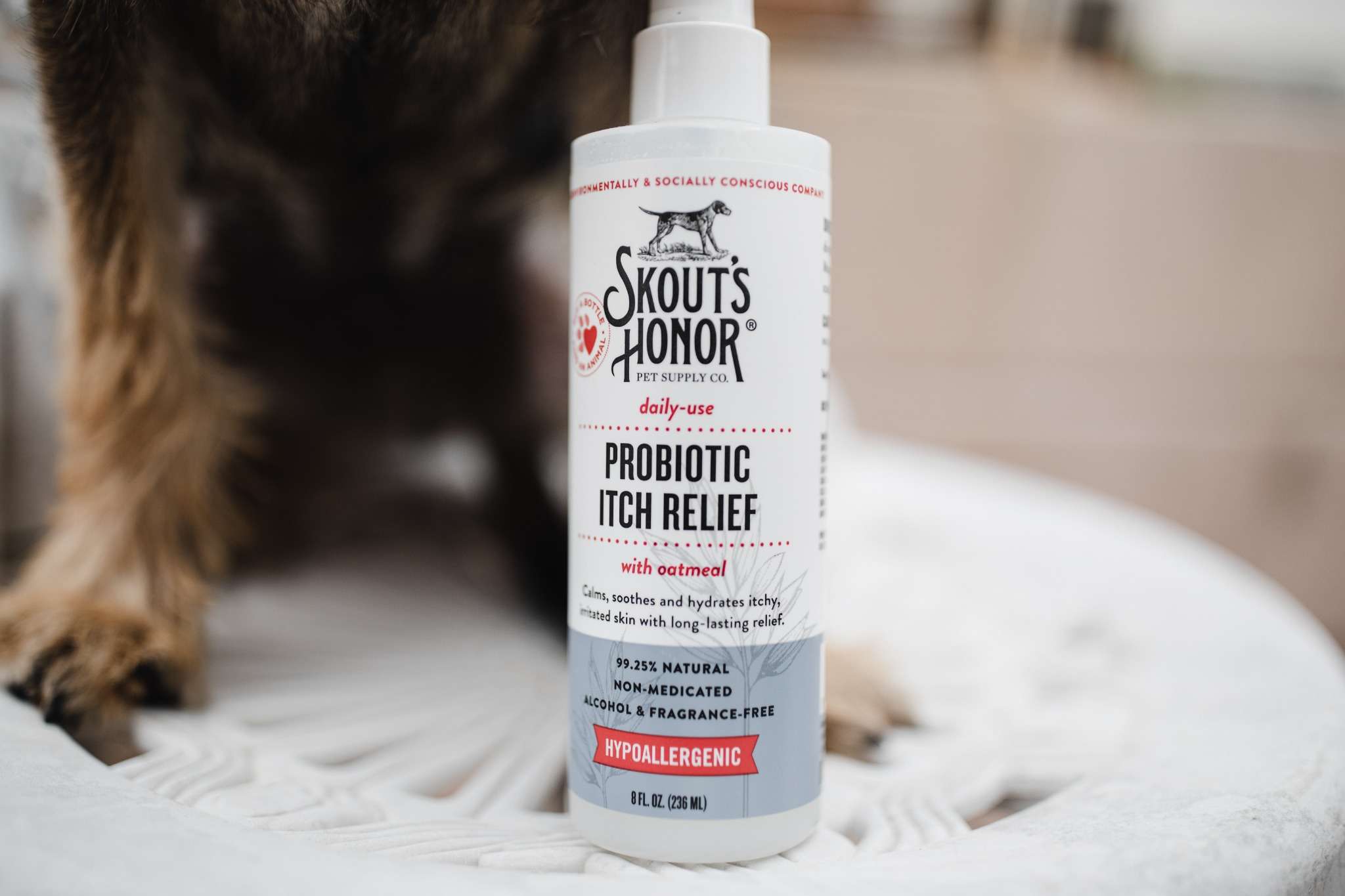
Between baths, our Probiotic Itch Relief Spray is soothing probiotic care made for itch-prone skin. It's non-medicated and Microbiome-Friendly Certified, powered by live probiotic kefir, aloe, and oat, and you can spritz it anywhere your dog is scratching. It's alcohol-free, fragrance-free, safe even if they give it a lick, and fine for cats too. Together the two make an easy daily rhythm, a gentle bath and then a light mist wherever your dog needs a little extra comfort, and if you'd rather grab the pair at once, there's a Probiotic Itch Relief Bundle.
The science, kept short
Backed by science and powered by nature, and honestly pretty simple. Topical probiotics are beneficial microorganisms applied straight to the skin. Ours are live probiotic kefir sealed in tiny beads that stay dry and dormant in the bottle, then break open on contact to release the live cultures onto your dog's skin, where they help the natural microbiome stay balanced. In other words, they work with your dog's skin rather than against it.
When will I see a difference?
Skin care is a routine, not a one-time fix, so give it a few weeks of consistency before you judge it. Most pet parents get a good read after about four to six weeks of regular baths and the spray as needed, and what you're looking for over that stretch is a softer, cleaner, healthier-looking coat and a dog who seems more at ease in their own skin. Fewer midnight collar concerts, ideally, for everyone's sake.
When should you call your vet?
Everyday skin care keeps your dog comfortable, but it doesn't replace a vet. Call for a visit if you notice raw, broken, or bleeding skin, bald patches or sudden heavy shedding, scratching that's constant or clearly distressing, or any swelling, discharge, strong odor, or sign of pain, and the same goes if the itch comes alongside changes in appetite, energy, or behavior. You know your dog better than anyone, so if something feels off, trust that, because a quick check-up can rule out allergies, infections, or parasites that need real treatment and it beats a long guessing game.
Scratching is your dog's way of asking for help, and the answer is usually written on their skin. Clean gently, support the microbiome, stay consistent, and bring in your vet when your gut says to. When you're ready to build the routine, have a look at our probiotic skin care lineup and find the gentle, microbiome-friendly match for your pup.
FAQ
Why is my dog scratching if it's not fleas?
Once fleas are ruled out, everyday scratching usually traces back to the skin itself: dryness, seasonal irritants like pollen, or a skin microbiome that's fallen out of balance from harsh products or over-bathing. Supporting that balance with gentle, microbiome-friendly care often makes a real difference in comfort.
Why does my dog keep scratching the same spot?
Repeated scratching, licking, or chewing in one area, usually the paws, belly, ears, or base of the tail, is worth watching. It can point to dry or irritated skin or an environmental trigger, and if the spot turns raw or the behavior is constant, check in with your vet.
Is it bad to bathe my dog too often?
It can be, if you're using the wrong shampoo. Sulfates and harsh detergents can strip the skin and leave it drier and more irritated, whereas a gentle, microbiome-friendly shampoo is designed to be used more often without that downside.
What is the skin microbiome and why does it matter?
It's the community of beneficial microorganisms living on your dog's skin. When it's balanced, skin stays more comfortable and copes better with everyday stressors, and when it's disrupted you tend to see itching, dryness, odor, and extra shedding.
How can I soothe my dog's itchy skin naturally at home?
Start with a gentle, sulfate-free bathing routine and keep skin comfortable between baths. A non-medicated, microbiome-friendly approach supports the skin's natural balance rather than stripping it, and it's best to skip harsh home remedies on irritated skin and check with your vet if the scratching is persistent.
Does apple cider vinegar help with dog itching?
It's a popular home remedy, but a mixed bag. Vinegar can sting on broken or already-irritated skin and does nothing for underlying microbiome balance, so a product actually formulated for your dog's skin is a gentler, more reliable choice.
Is it safe to use a probiotic itch spray every day?
Our Probiotic Itch Relief Spray is non-medicated and made for daily use. It's alcohol-free, fragrance-free, and safe even if your dog licks the area, so you can use it as part of a regular routine or whenever your dog needs a little extra comfort.
When should I see a vet about my dog's scratching?
If you see raw or broken skin, hair loss, relentless scratching, swelling, discharge, or any change in your dog's energy or appetite, call your vet. Everyday skin care supports comfort, but a vet should look at anything serious or persistent, including possible allergies, infections, or parasites.
Why Does My Dog Keep Scratching? Causes and Relief Tips