
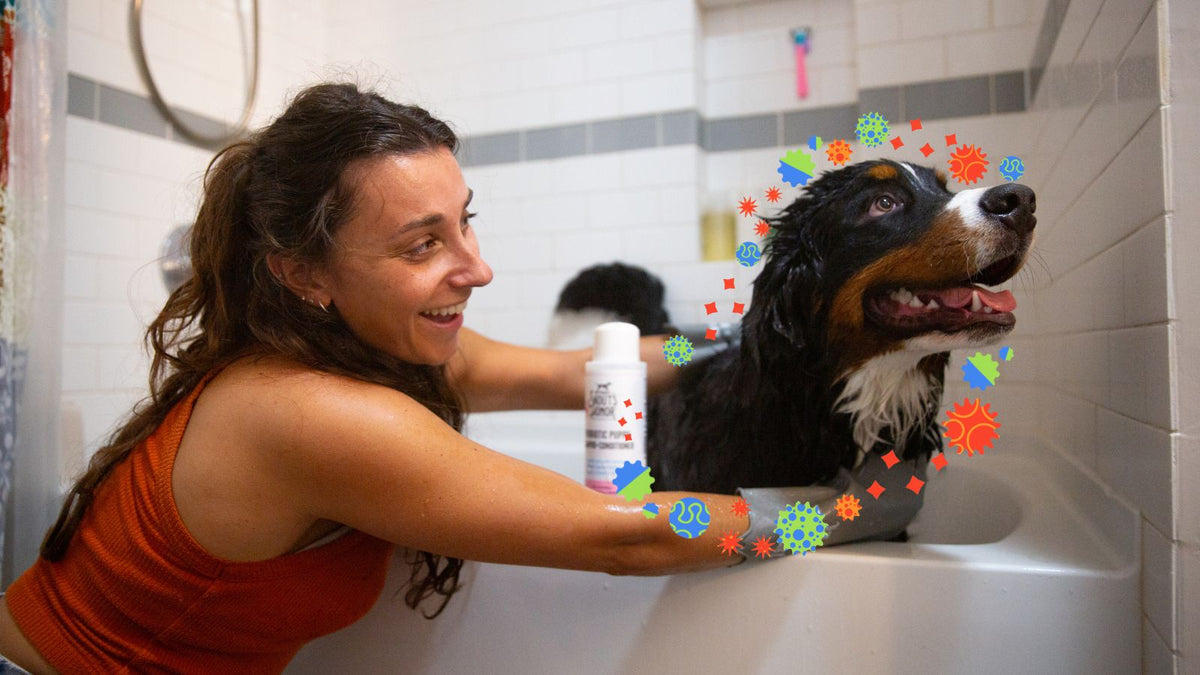
Frito feet: the smell we all know and love.
But do you know why it's there? Is it a good sign or a bad one?
Here's the answer to all your Frito feet questions. It's bacteria and yeast, living on the paw pads, going about their business. Completely normal, and not a sign that anybody needs a bath.
The pet skin microbiome is the name for those normal bacteria and yeast. Nearly every product on the shelf is built to strip that surface down, and almost none are built around the idea of supporting the microbiome's healthy balance of good and bad bacteria and yeast.
Working with the microbiome instead of against it, is something Skout's Honor does with all our grooming and wellness products. So let's talk about what it is, what's on their skin, and what the research does and doesn't say.
What is a microbiome?
A microbiome is a community of microorganisms living together in one place. You've probably heard the word about gut health, where bacteria help break down food. Skin runs on the same principle.
Here's the part that took me a while to sit with. The goal isn't zero bacteria. It's the right balance of them. You can't sterilize your way to good skin, and most of us figure that out the hard way, usually around the third bottle of shampoo.
What is the pet skin microbiome specifically?
The pet skin microbiome is the mix of bacteria and yeast living on your dog's or cat's skin and coat, mostly in and around the oil the skin makes for itself. That oil isn't grease waiting to be scrubbed off. It's the habitat.
Researchers at Texas A&M swabbed 12 healthy dogs and 6 allergic dogs and found that dog skin hosts "much more rich and diverse microbial communities than previously thought using culture-based methods" (Rodrigues Hoffmann et al., PLoS ONE, 2014). The older lab methods could only grow the microbes that were willing to grow in a petri dish, which turned out to be a small fraction of who was actually down there. We'd been taking attendance with a very short list.
| What they found | Detail |
|---|---|
| Haired skin is the busiest neighborhood | Higher species richness than mucosal surfaces and the transitional areas around the nose and lips |
| The dominant residents | Proteobacteria by phylum, with Oxalobacteriaceae the most abundant family |
| Allergic dogs differ | Lower species richness than healthy dogs |
| Every dog is different | High variability between dogs, and between spots on the same dog |
That last row is the one most articles skip right past, and it's our favorite. There's no single correct microbiome to aim for. Your dog's is his own.
What actually lives on a dog's skin?
Bacteria and yeast, and the specific names are worth knowing because they're not the ones most of us would guess.
The most abundant bacterial family in that Texas A&M work was Oxalobacteriaceae, largely environmental bacteria out of soil, water, and plants. Your dog is carrying around a bit of the neighborhood. Staphylococcus and Porphyromonas are also among the most abundant genera, and researchers found them on healthy and allergic dogs alike (Chermprapai et al., Veterinary Microbiology, 2019). Staphylococcus isn't an invader that turns up when things go wrong. It lives there. The question is how much of the room it takes.
The yeast side is where it gets interesting. A Texas A&M and NC State team sequenced Malassezia on healthy, naturally allergic, and experimentally sensitized dogs (Meason-Smith et al., Medical Mycology, 2020):
| Yeast species | Significantly more abundant on |
|---|---|
| Malassezia globosa | Healthy skin |
| Malassezia restricta | Healthy skin |
| Malassezia pachydermatis | Allergic skin |
Same genus, three species, opposite stories. Which is a decent argument against thinking about any of this as good bugs versus bad bugs.
Is a dog's skin microbiome the same as a human's?
No. Same idea, different tenants, and different enough that your own shower routine doesn't translate.
Dogs have a thinner outer skin layer, they're wearing a coat, and the dominant bacteria aren't ours. Which is the long way of saying human shampoo isn't a substitute in a pinch. Neither is baby shampoo, and I know somebody told you it was.
What disrupts a dog's skin microbiome?
Harsh cleansers, bathing more often than a dog needs, antimicrobial products used longer than anybody intended, and leftover residue from a rushed rinse. Nearly all of it is something a well-meaning person does on purpose, which is the frustrating part. Nobody's out here getting this wrong through carelessness.
| Disruptor | The everyday version |
|---|---|
| Sulfate-based cleansers | The shampoo that makes a big satisfying lather |
| Bathing without a reason | Weekly baths for a dog who rolls in one thing a month |
| Antimicrobial products as routine | Reaching for a medicated wash nobody prescribed |
| Heavy fragrance, dyes, alcohol | The spray that smells like a candle store |
| Incomplete rinsing | The rush job on a squirmy dog |
One finding here genuinely surprised me. When researchers tracked dogs through a course of topical antimicrobial therapy, microbial diversity on the skin actually increased as treatment went on (Chermprapai et al., 2019). Knocking the population down doesn't leave you a clean slate. It leaves a vacancy, and something moves in.
One important exception, because it cuts against everything else in this section. For dogs with diagnosed allergies, vets often recommend bathing more often, sometimes weekly, to physically rinse pollen and allergens out of the coat. If that's your dog and that's your vet's plan, your vet wins. Every general rule here loses to somebody who has actually examined your dog.
What happens when a dog's skin microbiome is disrupted?
A disrupted microbiome is associated with the familiar cluster: itching, dryness, irritation, odor, and skin that reacts to things it used to shrug off. What researchers actually measure is diversity, meaning how many kinds are present and how evenly they're spread.
You know the loop: The dog scratches, you give him a bath, because a bath feels like doing something. The wash takes the oils and a good share of the surface microbes with it. The skin gets drier. He scratches more. So you bathe him again, this time with something stronger.
More shampoo, more itching. It's a real pattern and it isn't your fault. Every bottle on that shelf is telling you the answer is another wash.
A better picture than good bugs versus bad bugs: a lawn gone patchy where one aggressive weed took over. Nothing evil showed up. The mix stopped being a mix. For the signs people tend to miss, we have a post on what dysbiosis actually looks like.
Does a disrupted microbiome cause my dog's itching?
Short answer: sometimes. Dogs with allergic skin disease consistently show lower microbial diversity, so the association is real. What nobody has nailed down is the direction of the arrow: whether the shift in the community drives the skin disease, or the inflammation reshapes the community.
One finding makes the simple version harder to believe. In that Malassezia study, when researchers deliberately induced allergic skin lesions, the yeast populations did not shift along with them (Meason-Smith et al., 2020). If the microbiome shift were straightforwardly driving the disease, you would expect them to move together.
We're telling you this because the version where the microbiome is the root cause and rebalancing it fixes everything is cleaner than the evidence supports. It's also the version that leads people to treat a grooming product as a solution to a medical problem, and that's the part that costs a dog time. What the research does support is narrower and still worth acting on: lower diversity travels with allergic skin disease, and some of what reduces it is in your hands.
Am I bathing my dog too much?
Could be, and it's the most common version of this whole problem. Unless your vet handed you a schedule, most dogs do fine on about every four to six weeks, adjusted for coat, activity, and whatever he most recently rolled in.
A quick gut check:
- You bathe on a calendar, not because he needs it
- He gets itchier a day or two after a bath, not less itchy
- You've switched shampoos three or more times this year
- You're using a medicated wash nobody prescribed
- The coat squeaks instead of feeling soft after you rinse
Two or more of those and we'd recommend looking at the routine before checking out another product.
Also, and we say this with real affection: your dog does not think he smells bad. The bath is for you. That's a perfectly respectable reason to give one. Just leave more room between them.
How do you support your dog's skin microbiome?
Bathe on a reason instead of a schedule, use gentler products, and pick formulas made to leave the community intact instead of stripping it. There's no single bottle that does this by itself, and anybody telling you otherwise is selling a little harder than they should be.
- Bathe for a reason. Mud, a roll in something, a vet asking you to. Habit is not a reason.
- Read the surfactant, not the front of the bottle. Sulfate-free is a starting signal rather than a guarantee, since some replacements are no gentler. It lathers less, which is the point, not a defect.
- Rinse longer than you think you need to. Then rinse once more. Residue is the easiest thing on this list to fix and it costs you nothing but water.
- Brush more, wash less. Brushing does more for smell than people expect, and a wipe-down handles the in-between days. Product can't reach skin under a mat anyway. Our HydroClear™ Wipes are made with Hyaluronic Acid to hydrate and clean in one step.
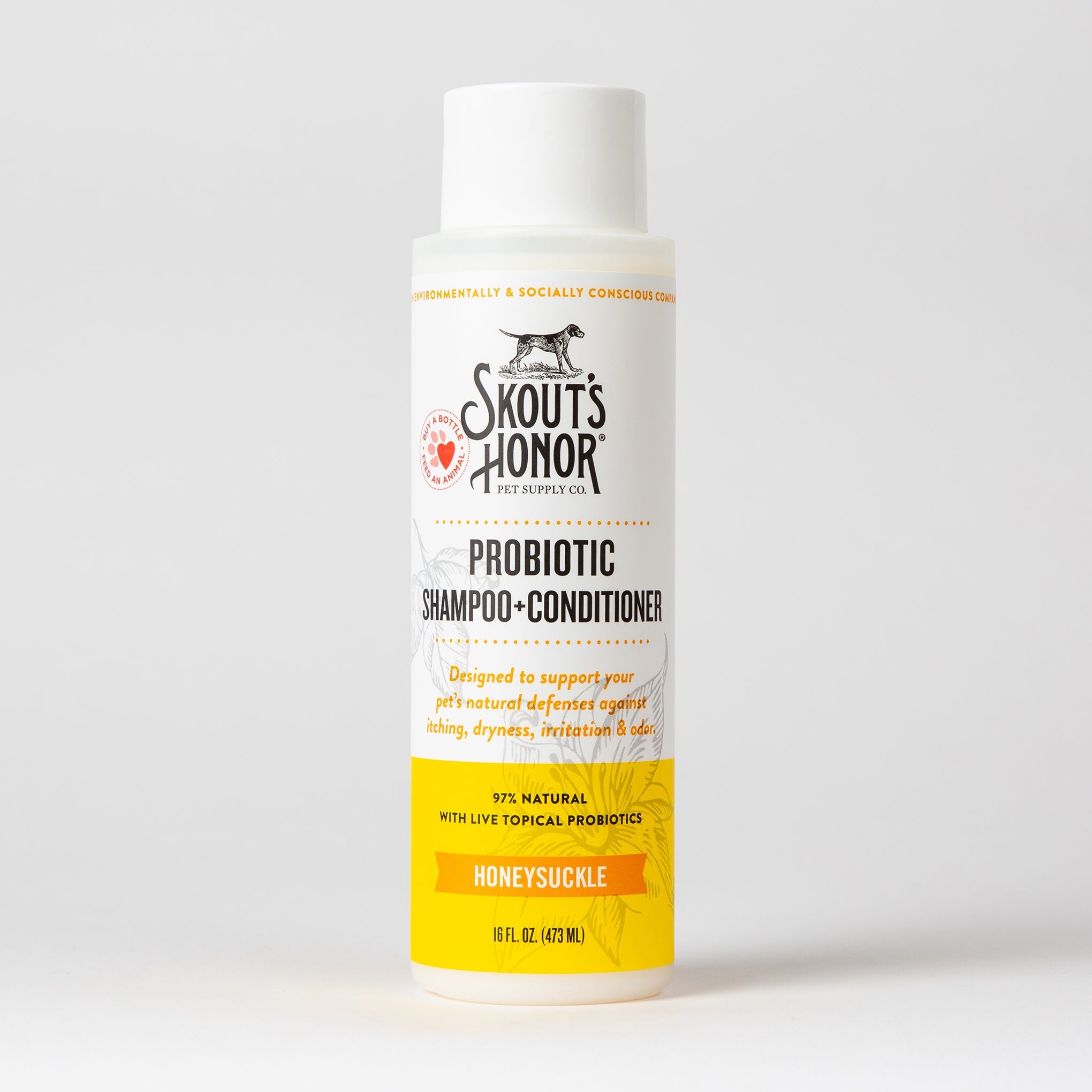
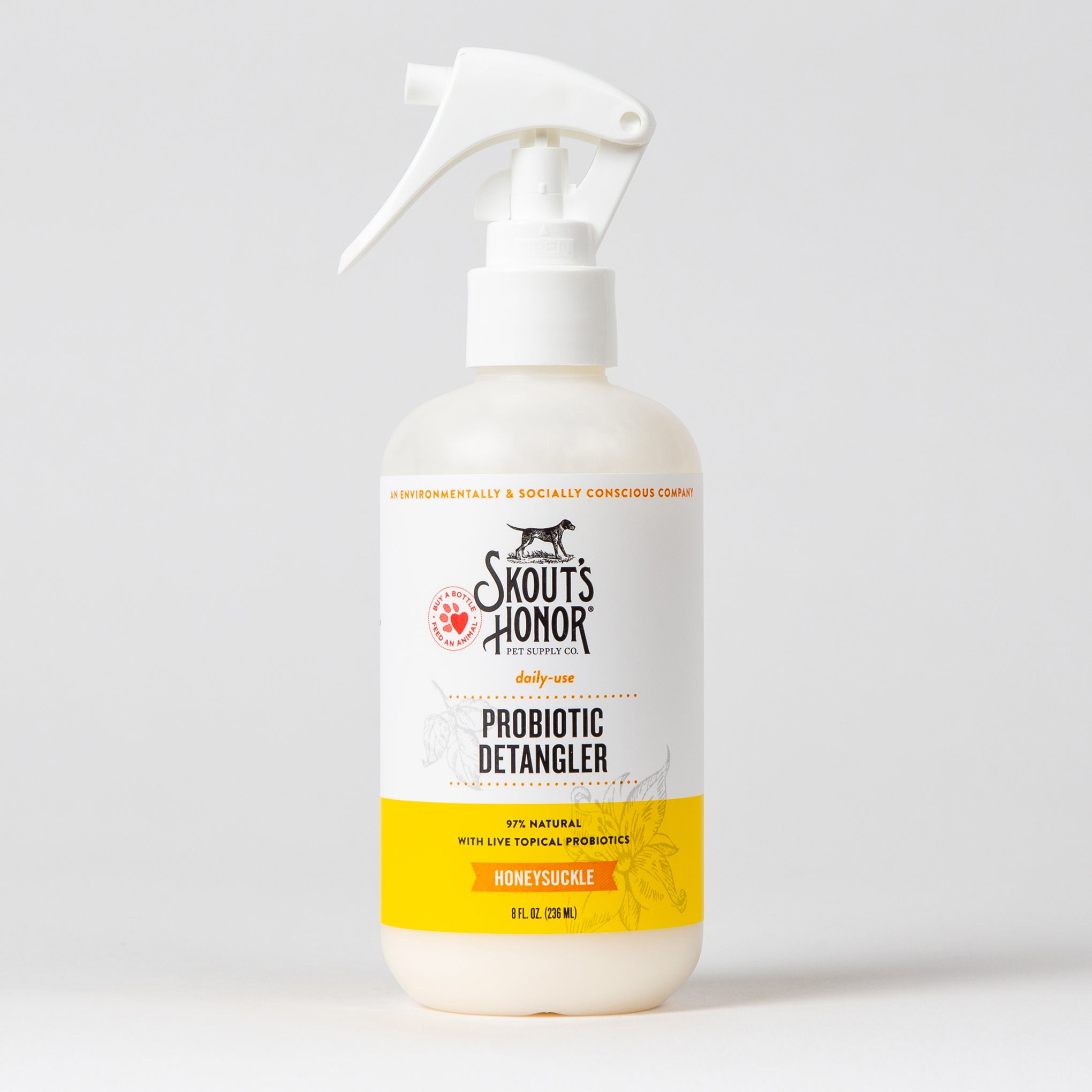
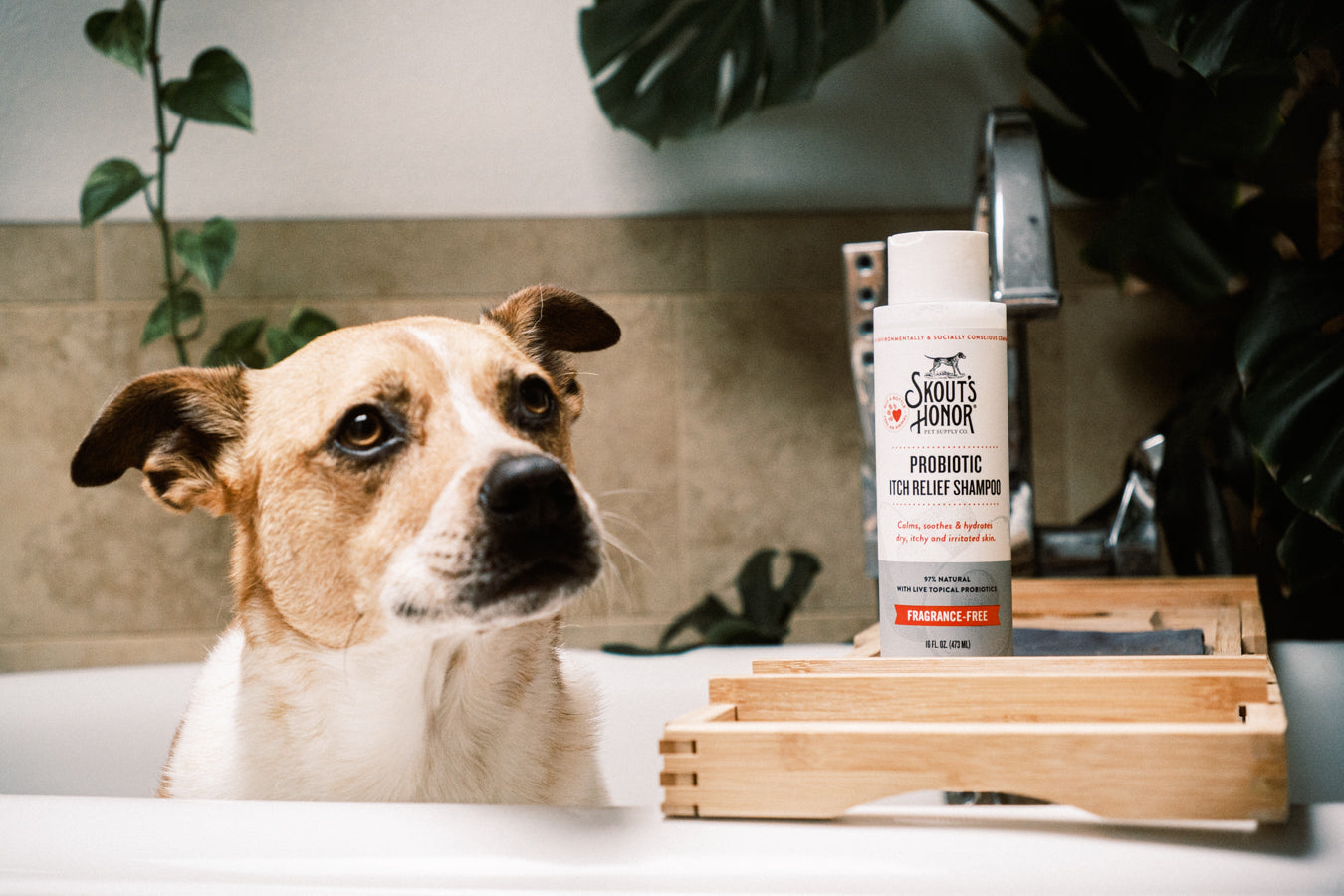
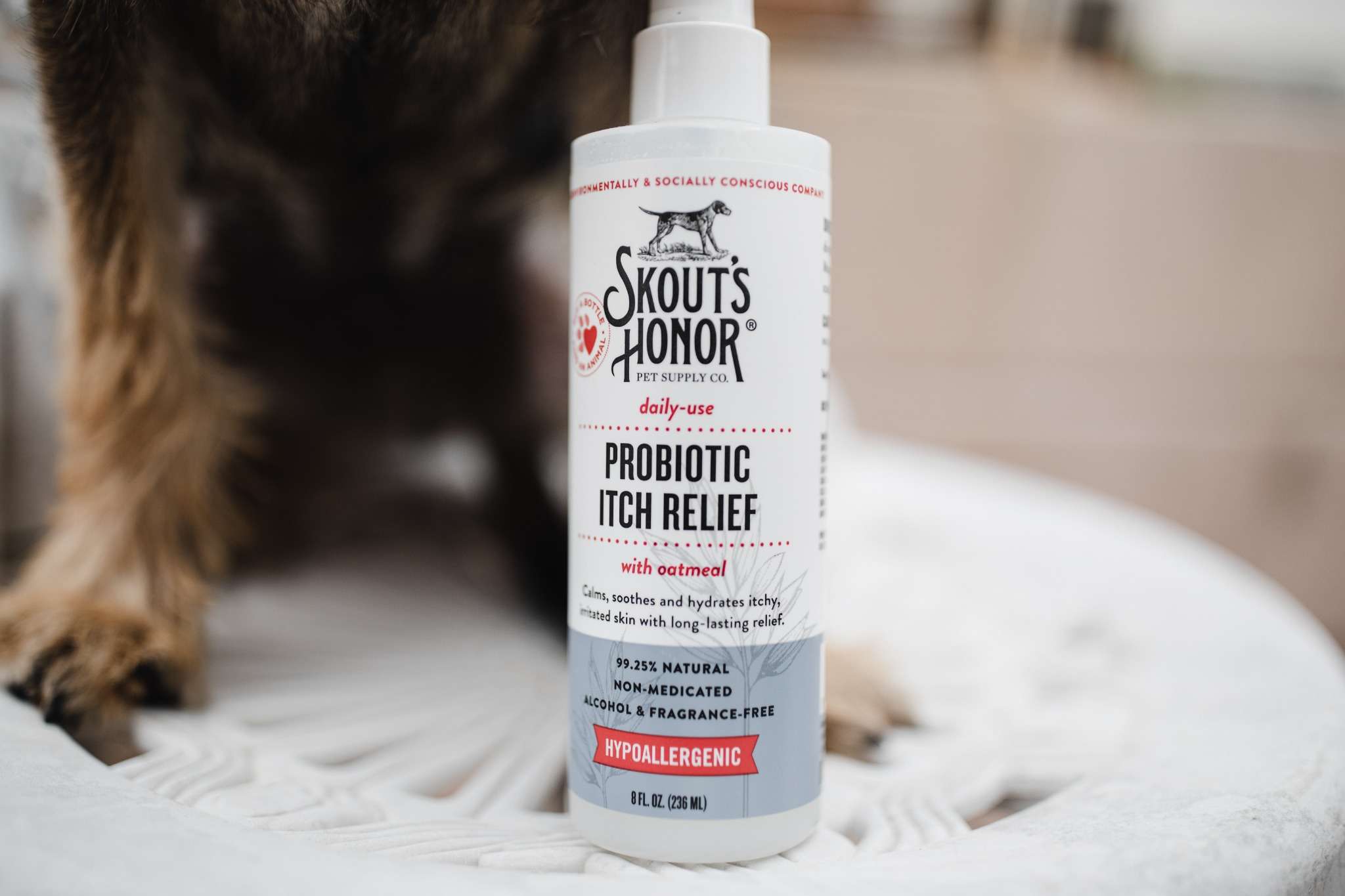
- Choose microbiome-friendly formulas. Our Probiotic Shampoo + Conditioner and Probiotic Itch Relief Shampoo are Microbiome-Friendly Certified. For cats, the Cat Probiotic Shampoo + Conditioner is designed to be microbiome-friendly.
- Give it weeks, not days. Skin and coat turn over slowly. One bath tells you almost nothing.
What should you look for on a dog shampoo label?
A third-party microbiome certification, a sulfate-free base, probiotics or prebiotics, and a free-from list that names actual things. Here's what I check, in the aisle, holding the bottle.
| Look for | Skip |
|---|---|
| Microbiome-Friendly Certified (independently tested) | "Microbiome-safe" with nothing behind it |
| Sulfate-free | SLS or SLES high in the list |
| Topical probiotics or prebiotics | "Probiotic" on the front, none in the ingredients |
| Named oils and actives (avocado, argan, aloe) | "Botanical blend," unspecified |
| A specific free-from list | "Chemical-free," which isn't a real thing |
The first one is the only claim on that shelf somebody outside the company verified. MyMicrobiome tests a formula and validates that it does not disrupt the skin's natural microbial community. It's a claim about what a product doesn't do, which is a strange thing to advertise and a useful thing to know.
Where do topical probiotics fit in?
Topical probiotics are live, colony-forming beneficial microorganisms applied to the skin to support its natural microbiome. It's the opposite move from stripping. Instead of taking things off the surface, you're adding to it.
The mechanism is simpler than it sounds. Live probiotic kefir gets sealed into tiny beads that keep it dry and dormant in the bottle. When the product goes on, the encapsulation breaks down and releases the live cultures onto the skin, where they stay active while the natural microbiome stays intact. Prebiotics work alongside them as food for the good microbes already living there, which is the thinking behind our Prebiotic Pet Balm for dry noses and rough paw pads.
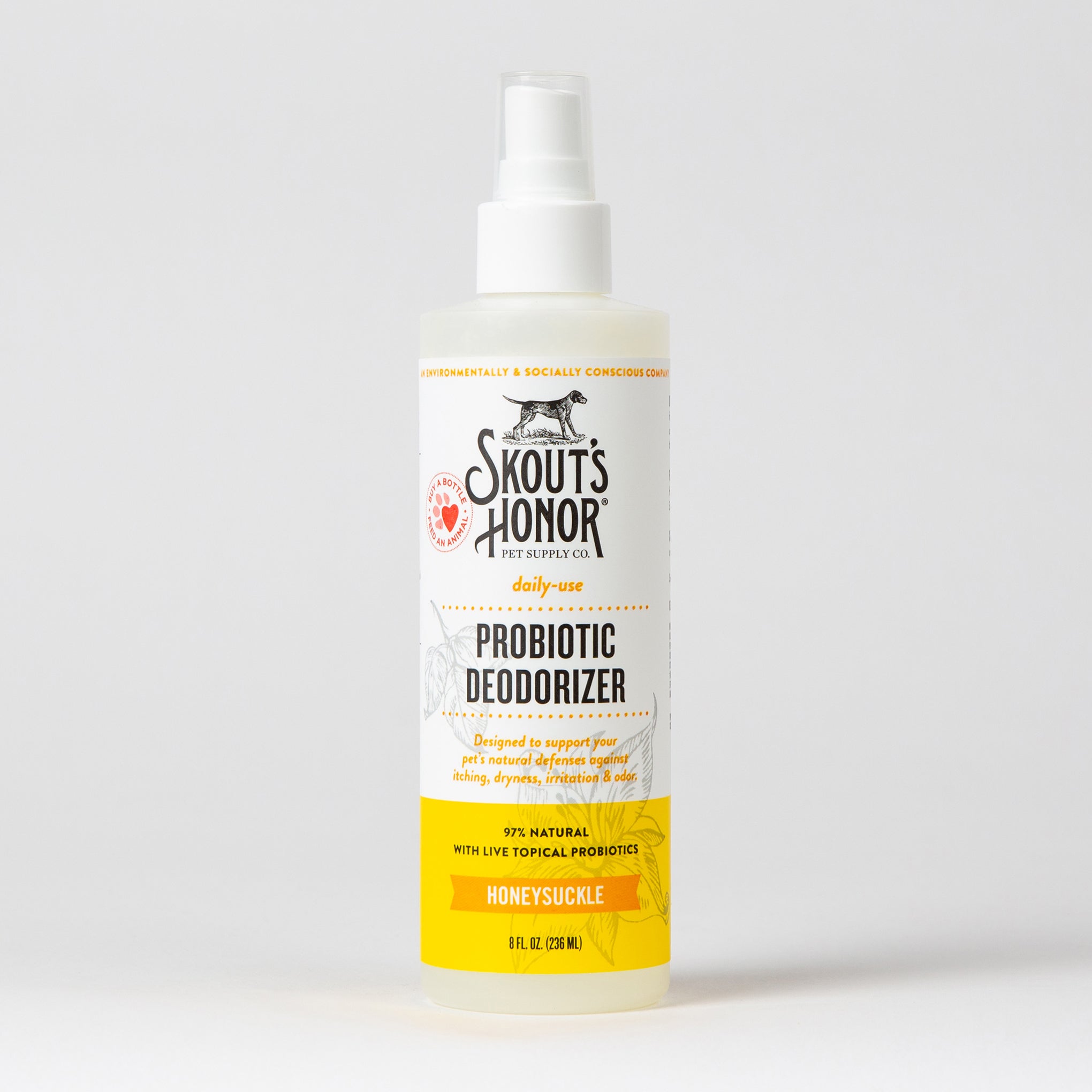
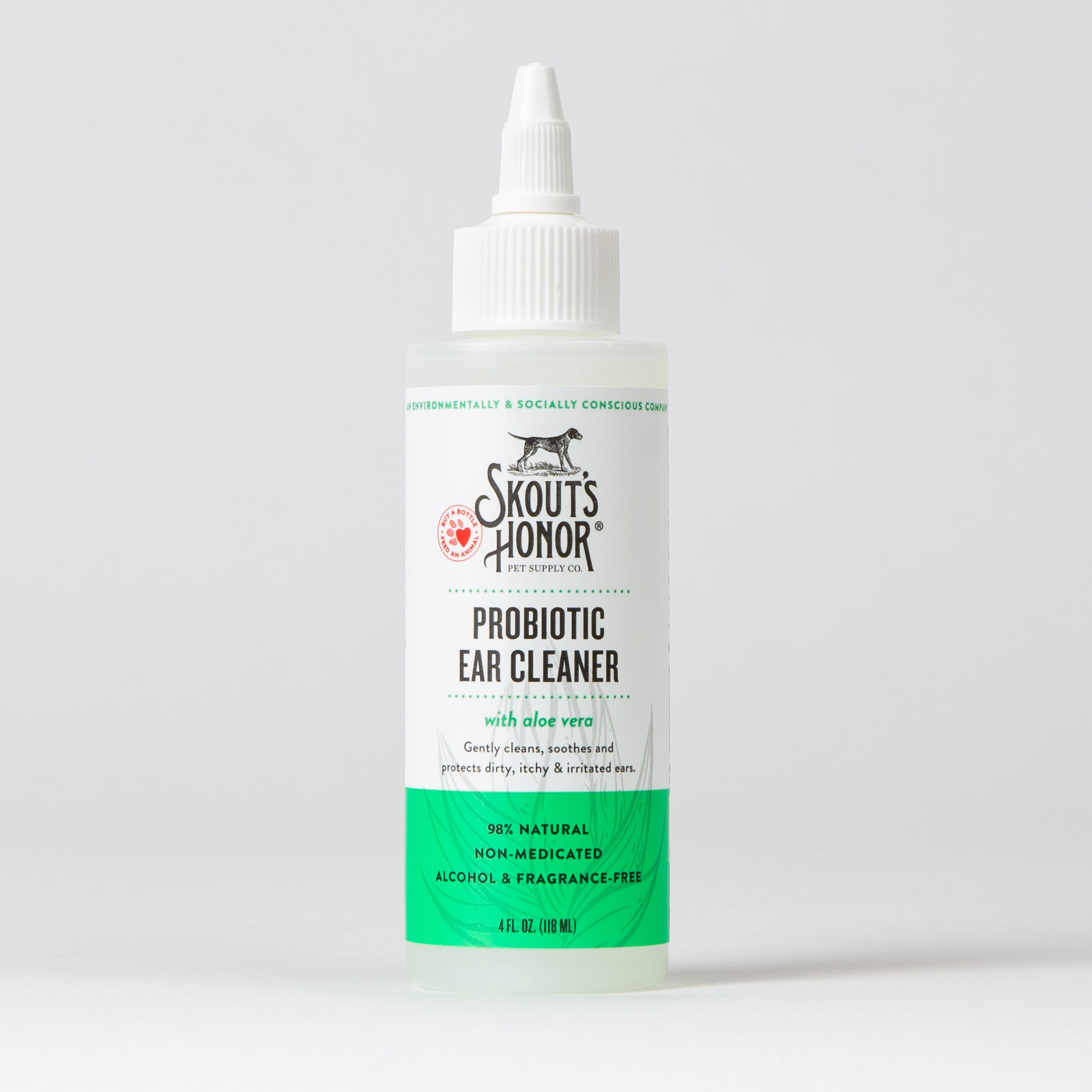
Notice how narrow that claim is. We're not telling you a shampoo rebuilds an ecosystem. We're telling you it can clean without taking the ecosystem down with it, and that an independent lab checked. The certified range covers bath day and the days between, including the Probiotic Deodorizer and the Probiotic Ear Cleaner, and the full set lives in the Microbiome-Friendly Certified collection.
Since you've read this far, you've earned the unvarnished version. The microbiome is not why most people buy our shampoo. We went through thousands of our own customer reviews, and probiotic and microbiome talk landed near the bottom of what buyers actually mention. They talk about how the dog smells and how the coat feels. The science is why it works, not why anybody picks it up off the shelf. We'd rather explain it properly to the people who want to know than put it on a billboard.
If you'd rather see a whole routine, we mapped out a probiotic skin care routine, and a day-to-day itch routine for rough stretches.
When should you call your vet?
Any time the skin is doing something that isn't cosmetic. Grooming is for comfort and how the coat looks. Everything on this list is a medical question, and it belongs with somebody who can put hands on your dog.
- Open, oozing, bleeding, or crusted areas
- Hair loss in patches, or skin that's thickened or darkened
- A smell that's strong, sour, or new, including from the ears or paws specifically
- Scratching hard enough to break skin or wreck everybody's sleep
- Head shaking, ear odor, or discharge
- Skin changes alongside changes in weight, energy, or appetite
- Anything clearly getting worse rather than holding steady
Itching has a long list of possible causes and sorting out which one you're looking at takes an exam. Our post on why your dog is scratching when fleas aren't the answer walks through them. Ask about a veterinary dermatologist if it keeps coming back. And if your dog is already on a plan from your vet, stay on it. Nothing I've said here replaces that.
So: bathe him on a reason, read the back of the bottle instead of the front, and remember there's a whole community living out there doing quiet work. Be nice to the neighbors.
And together, we feed an animal in need with every purchase. That's our Paw Pledge.
FAQ
What is the pet skin microbiome?
The community of bacteria and yeast living on a dog's or cat's skin and coat, mostly in and around the skin's natural oil. It's on every animal and it belongs there. Sequencing has shown it to be far more diverse than older culture-based methods suggested.
What actually lives on a dog's skin?
Not what most people guess. In healthy dogs the most abundant bacterial family was Oxalobacteriaceae, largely environmental bacteria from soil, water, and plants. Staphylococcus and Porphyromonas are also among the top genera and appear on healthy and allergic dogs alike. On the yeast side, Malassezia globosa and M. restricta are significantly more abundant on healthy skin, M. pachydermatis on allergic skin.
Do dogs and cats have a skin microbiome like humans?
Yes, but the makeup differs. Dogs have a thinner outer skin layer and a coat, and the dominant bacteria aren't ours. Human and baby shampoos aren't appropriate substitutes.
What disrupts a dog's skin microbiome?
Sulfate-based cleansers, bathing more often than needed, antimicrobial products used as routine rather than as prescribed, heavy fragrances and dyes, and residue from incomplete rinsing.
Does a disrupted microbiome cause my dog's itching?
Sometimes, but that isn't settled. Lower microbial diversity consistently travels with allergic skin disease, so the association is real. Which direction the causality runs is still open, and in one study yeast populations did not shift alongside deliberately induced allergic lesions. In short: It can be, but if you've used gentle, Microbiome Friendly products and are still having issues, it could call for a vet visit.
How often should I bathe my dog?
Unless your vet recommended a schedule, most dogs do well on about every four to six weeks. The exception is dogs with diagnosed allergies, where vets often recommend more frequent bathing to rinse allergens from the coat. Your vet's plan beats any general rule.
What does Microbiome-Friendly Certified mean?
The product was independently tested by MyMicrobiome and validated not to disrupt the skin's natural microbial community. Third-party verified, not self-applied, and only a handful of brands carry the seal.
What's the difference between topical probiotics and prebiotics?
Probiotics are live beneficial microorganisms added to the skin surface. Prebiotics are a targeted food source for the microbes already living there. Different jobs, and they pair well.
Why Is My Dog Scratching If It's Not Fleas? It Might Be Their Skin